11 / 15
Fyllingen
2023
Landfill, ground and a long-term strategy
Bachelor thesis, Bergen School of Architecture
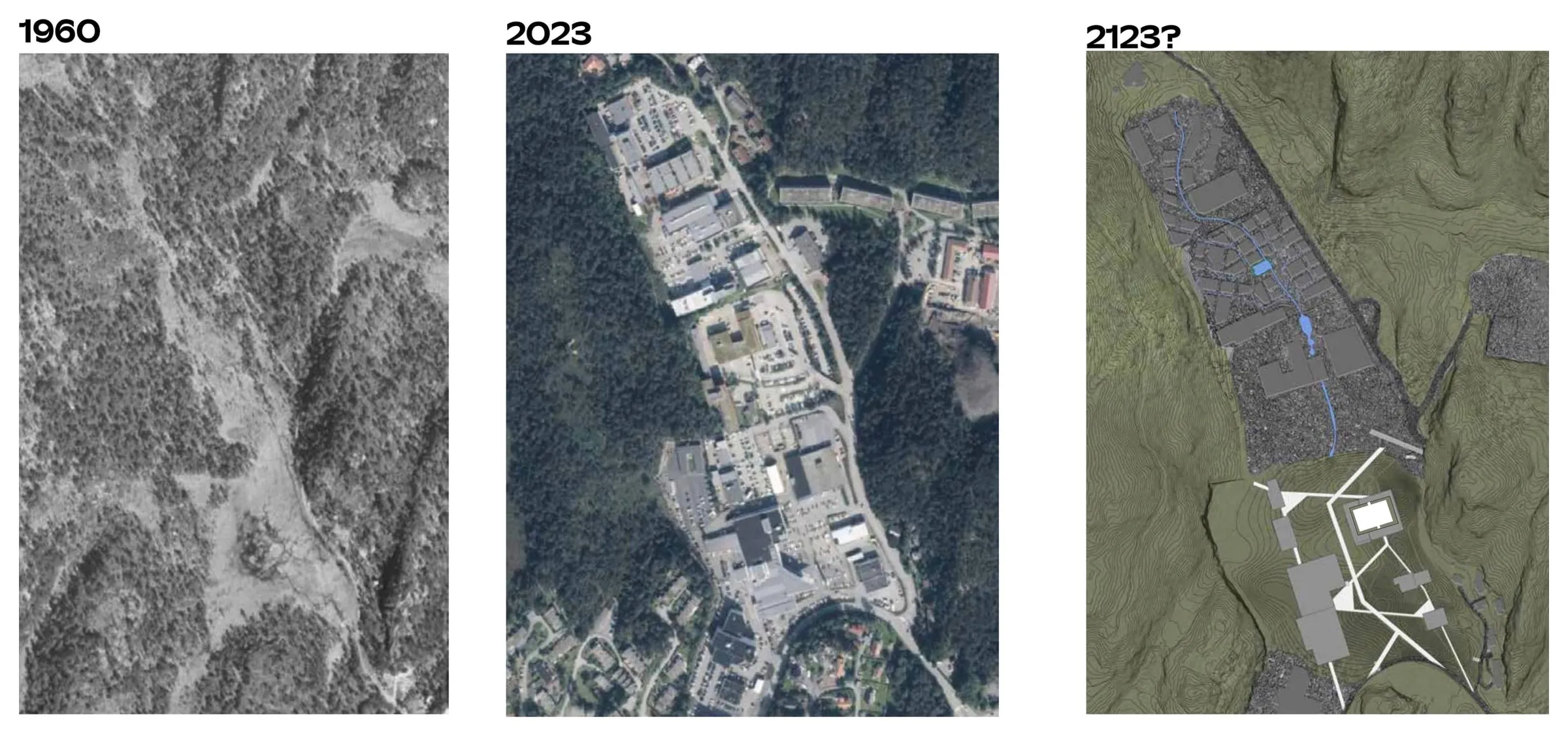
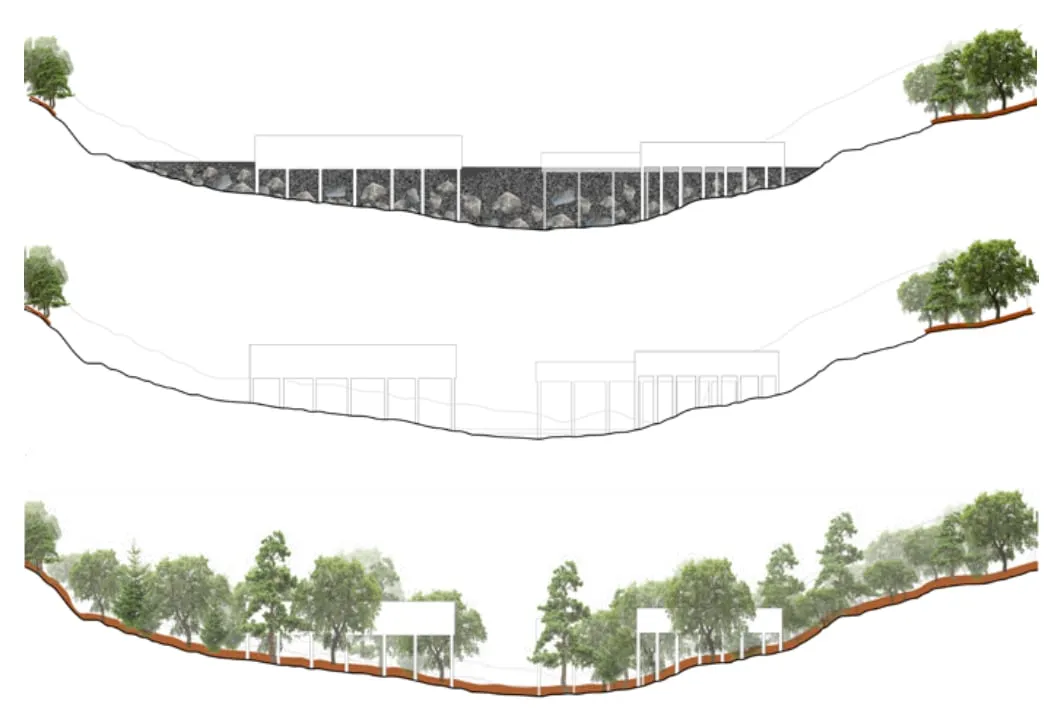
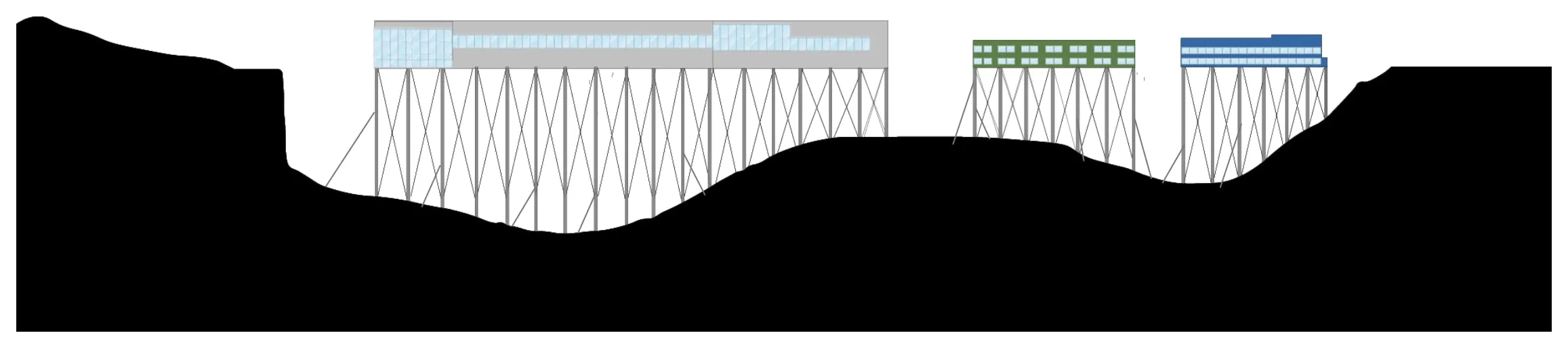
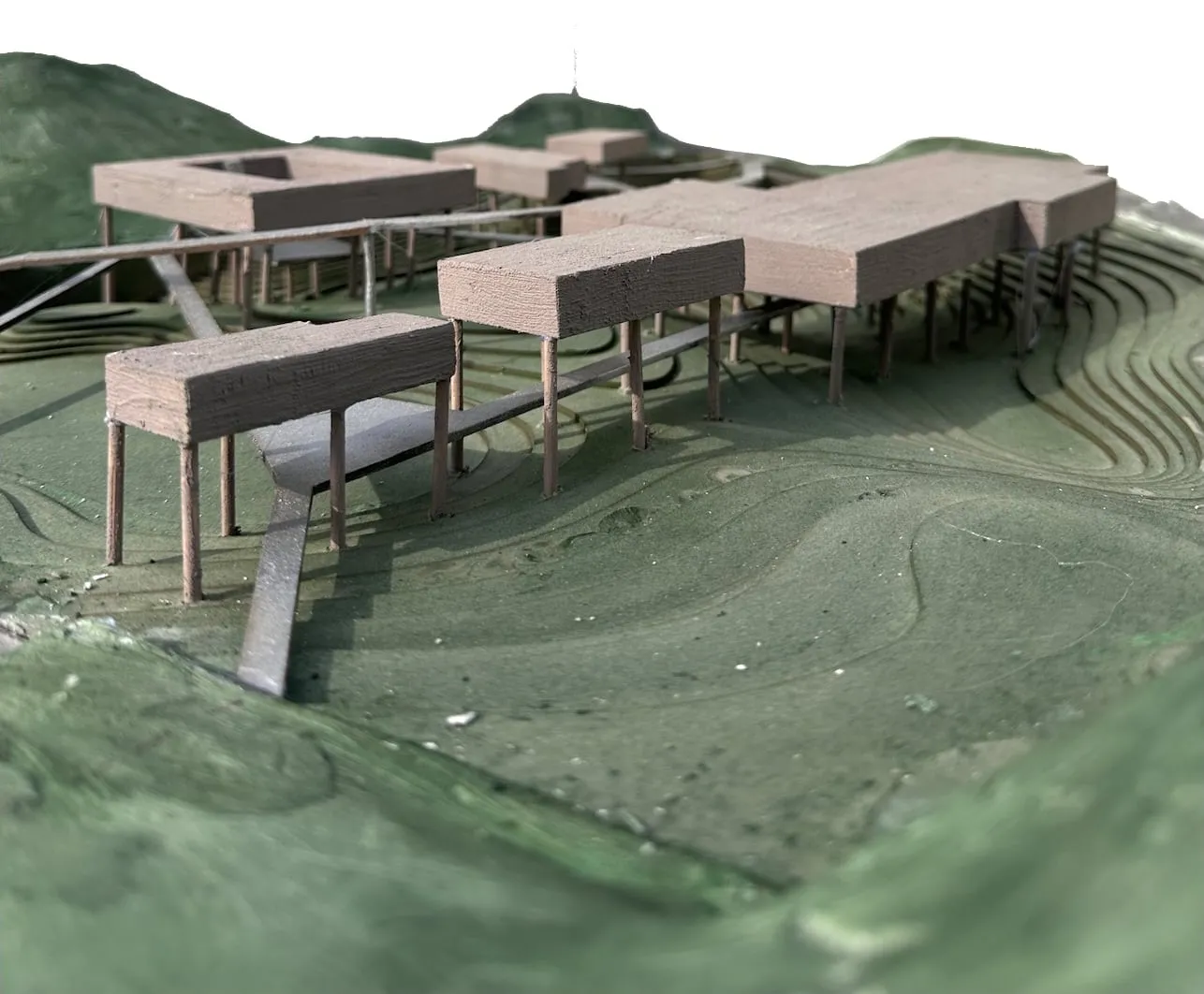
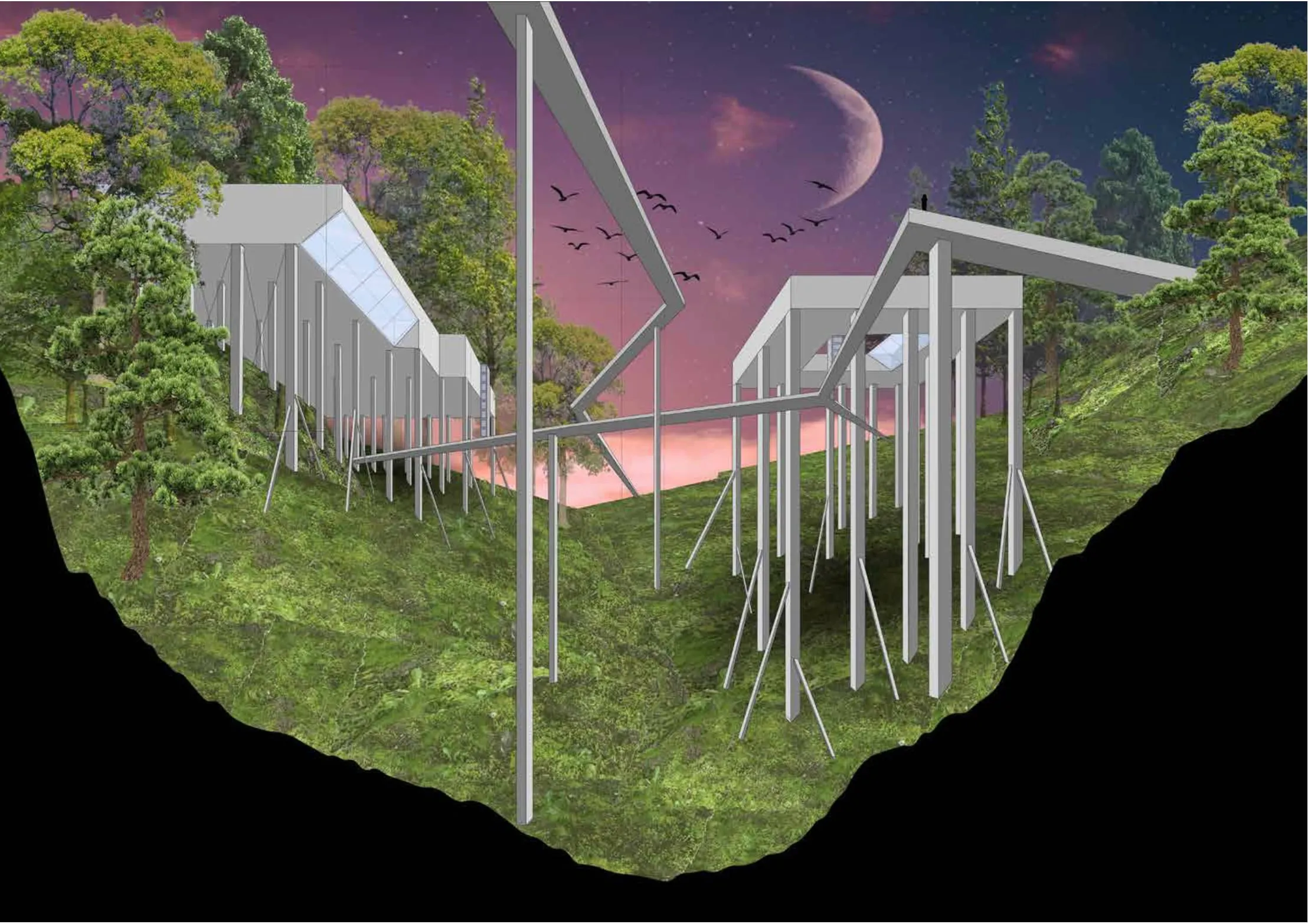
Spelhaugen in Bergen is built on an old landfill, capped with asphalt and parking. Fyllingen asks what happens if you dig it out. The waste is removed, sorted and recycled, and the ground is left to grow back. The buildings already standing on the tip are kept: they rest on long piles, and once the waste that held them in balance is gone, new bracing takes its place. Above the regrowing ground a raised walkway, the lifeline, ties everything together, so people can move through the site without disturbing it. It is not meant as a finished design but as a long-term strategy: proof that there is an alternative to leaving the landfill capped.
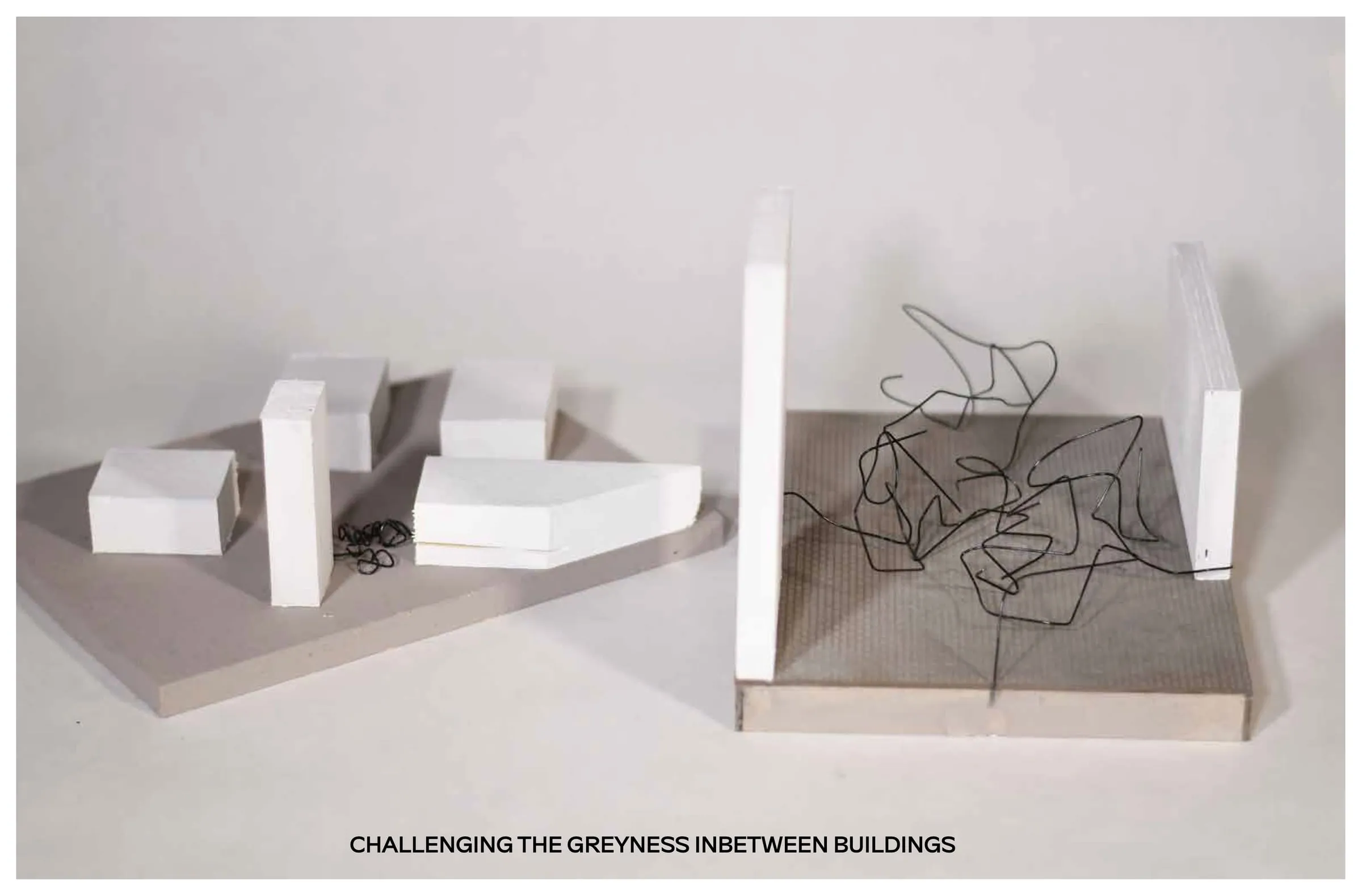
Cap land /kæp lænd/, noun. A piece of land where an exceeding amount of ground is covered by asphalt. Hostile to most forms of life, and often designed for cars and other machines. Whatever lies underneath is sealed off, and over time forgotten.
Background
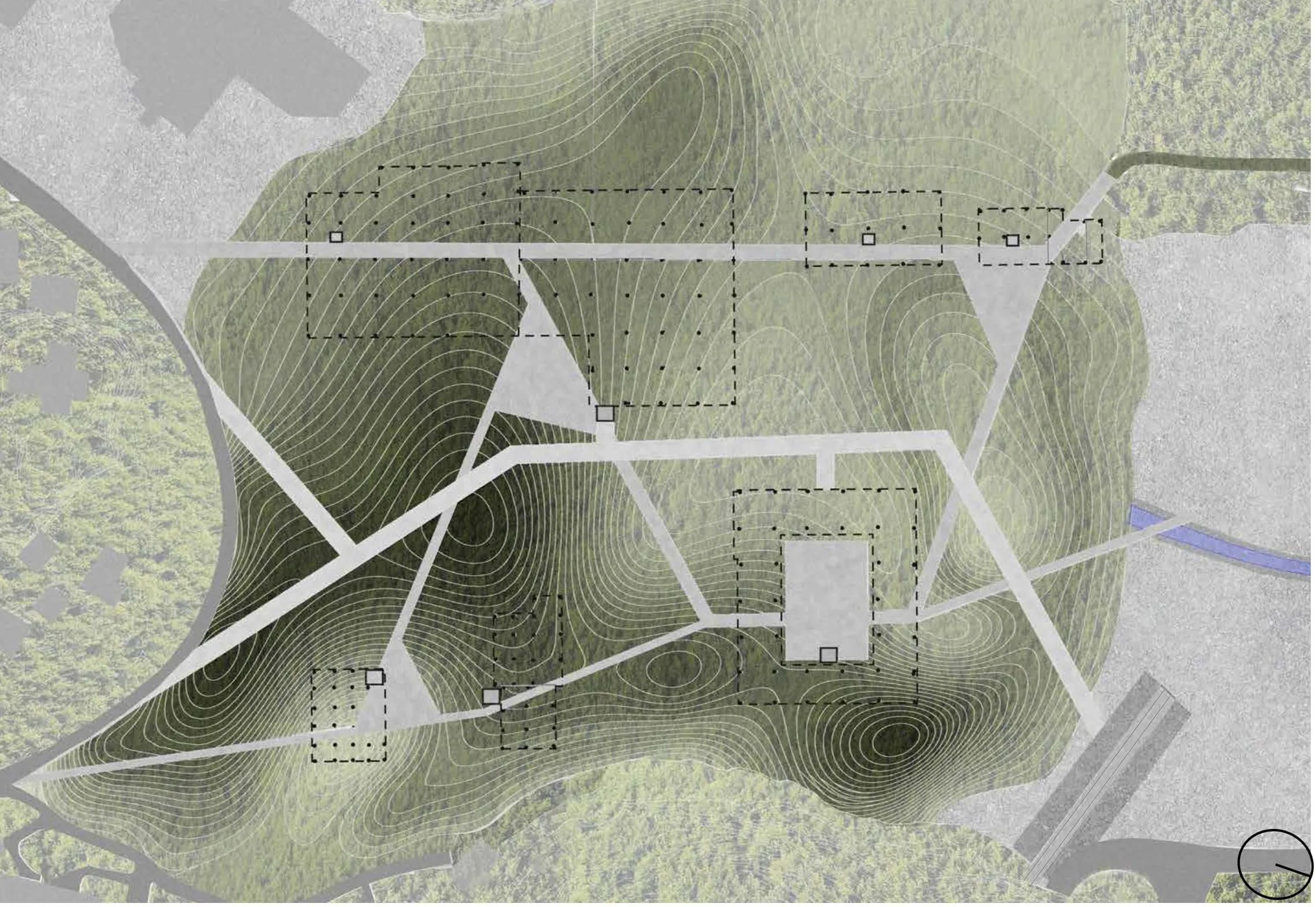
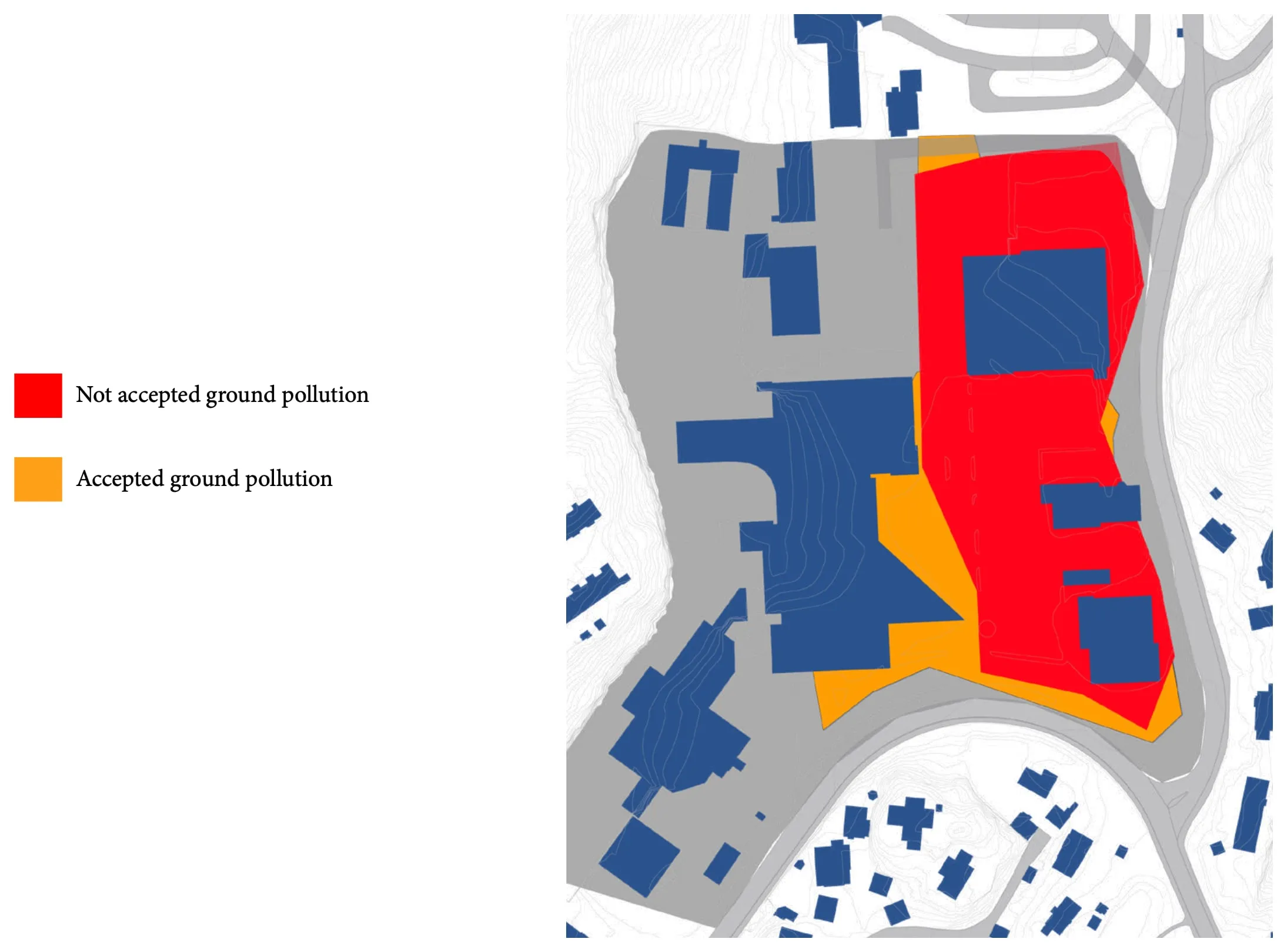
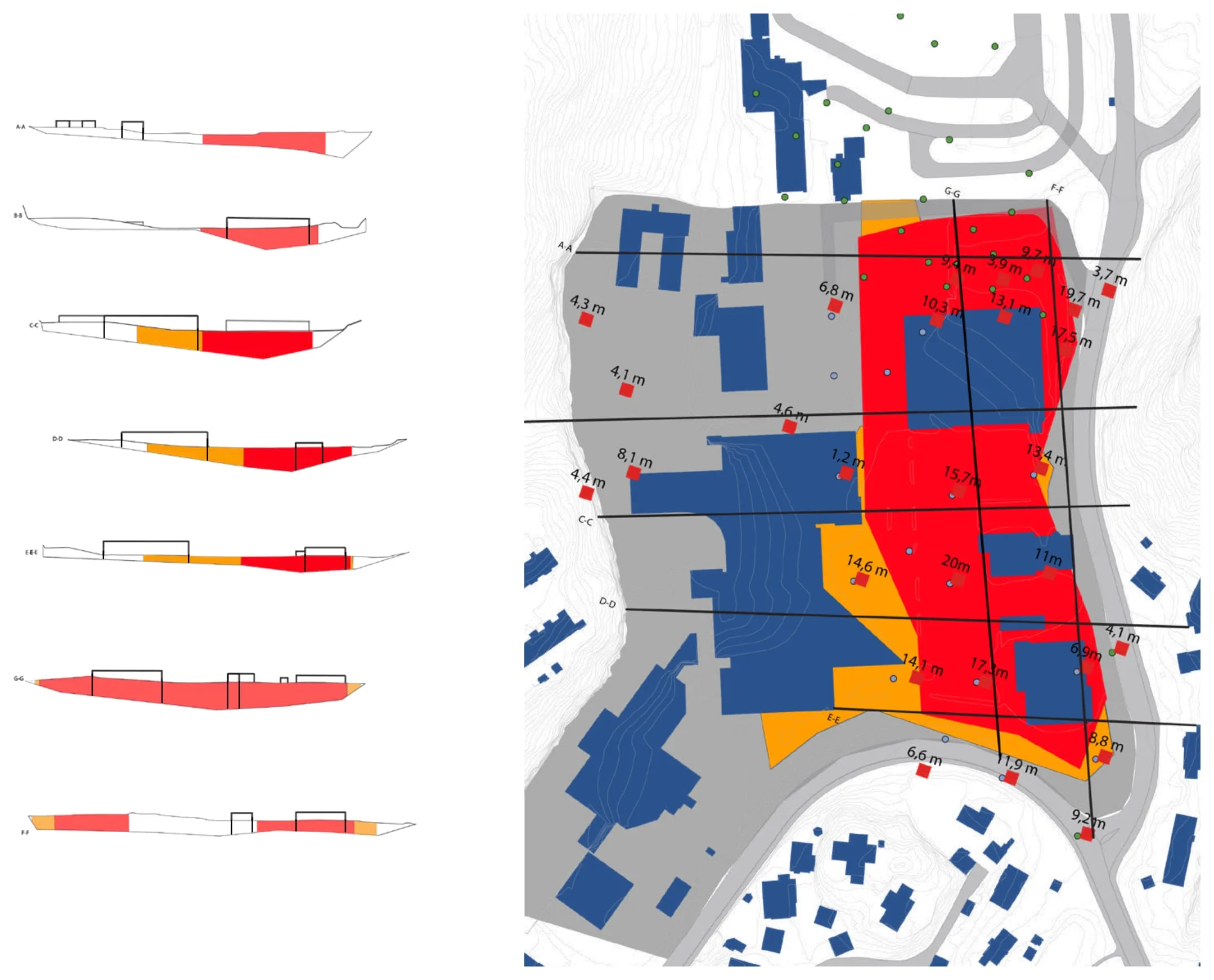
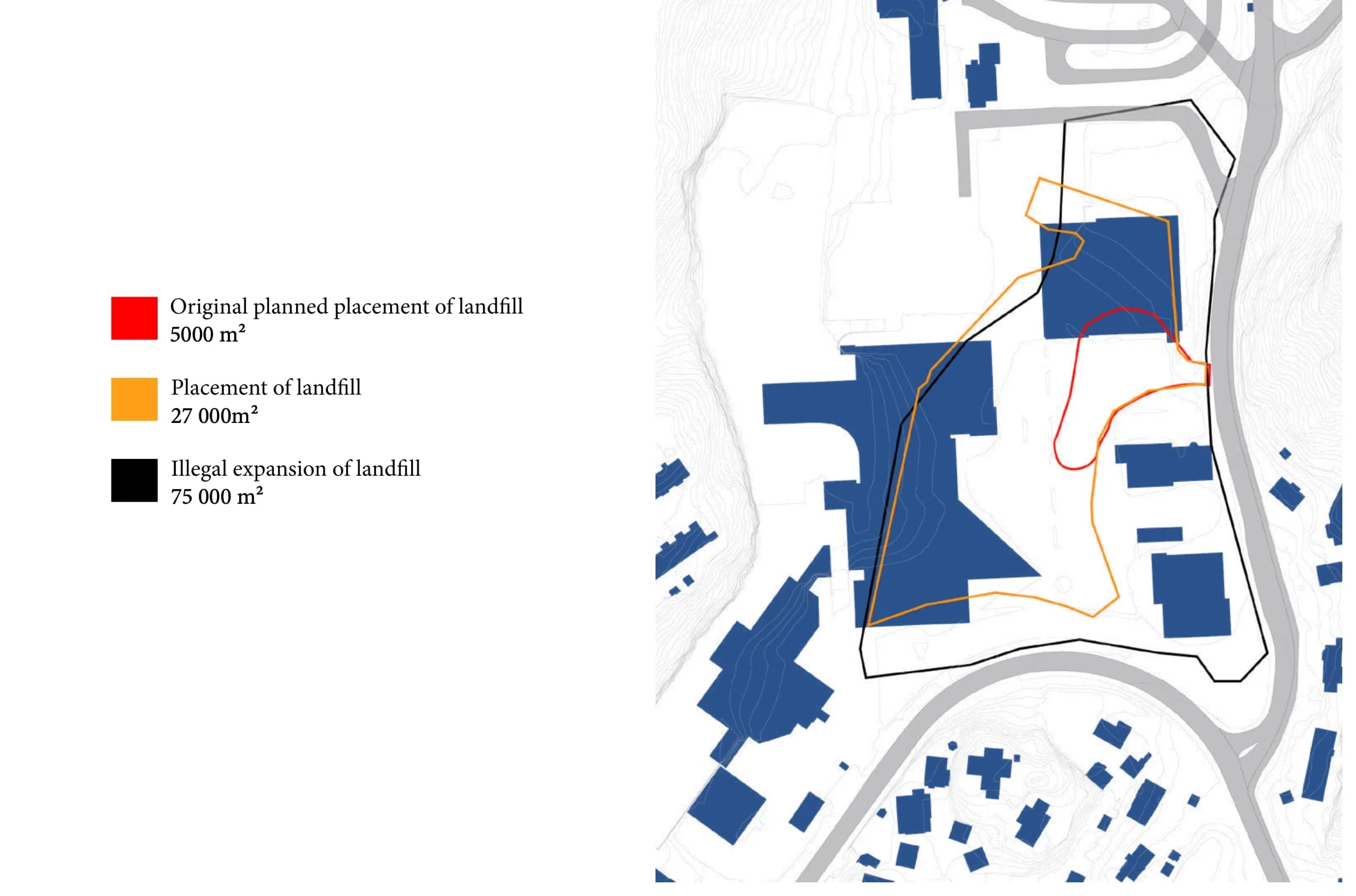
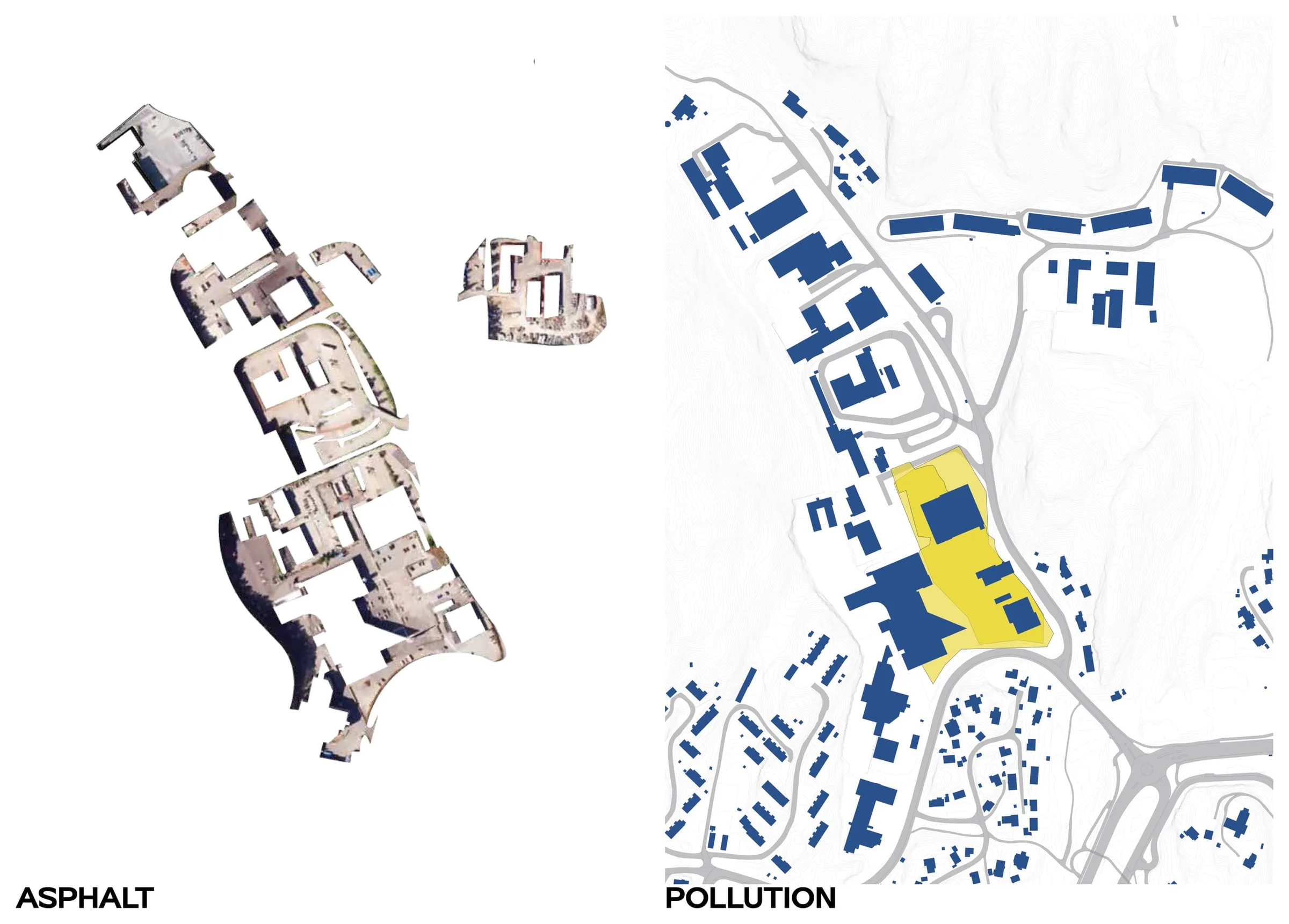
How can the architect restore and take back what cap lands have hidden away? Spelhaugen was planned for a landfill of 5,000 m². It grew to 27,000 m², and then, illegally, to 75,000 m². Today it lies capped under asphalt, parking and big buildings, and none of it can be seen from the surface.
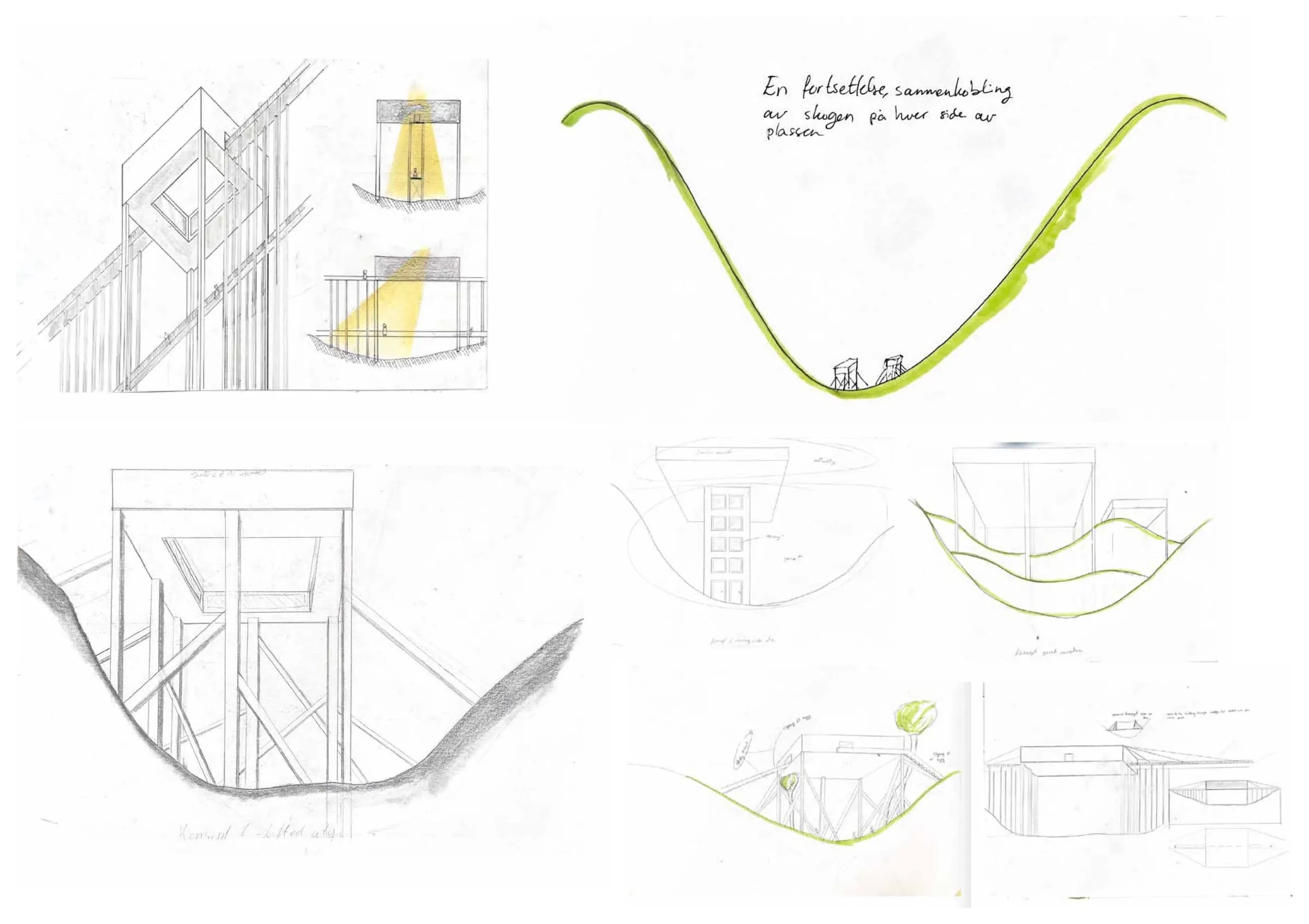
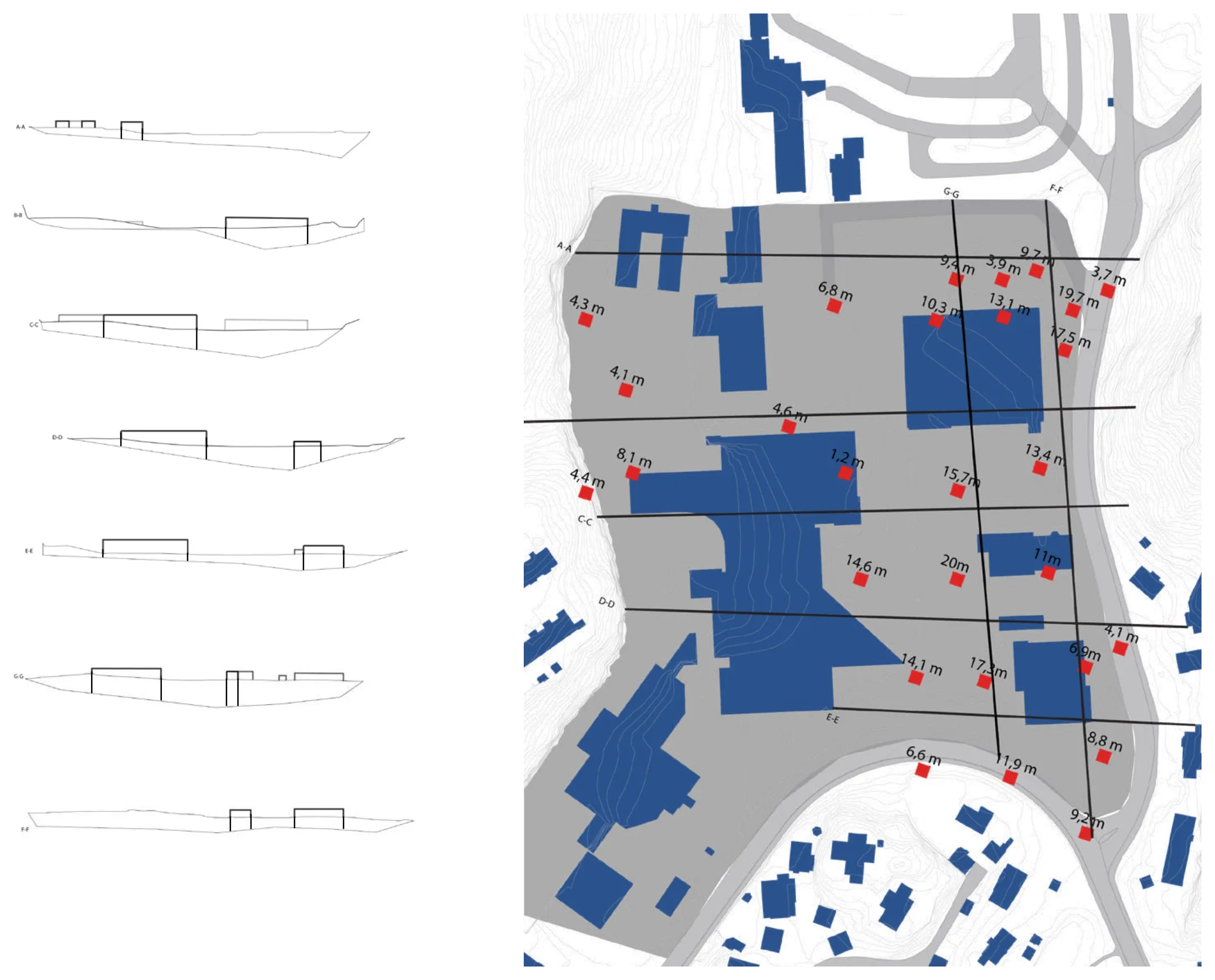
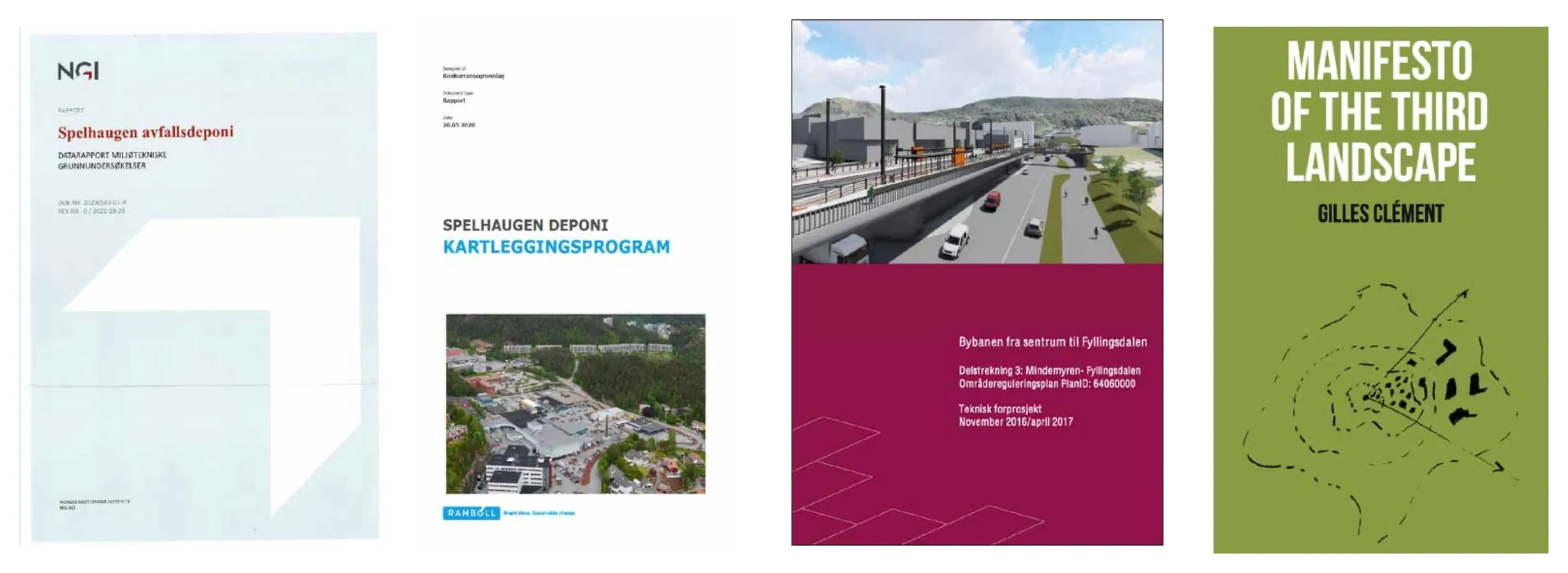
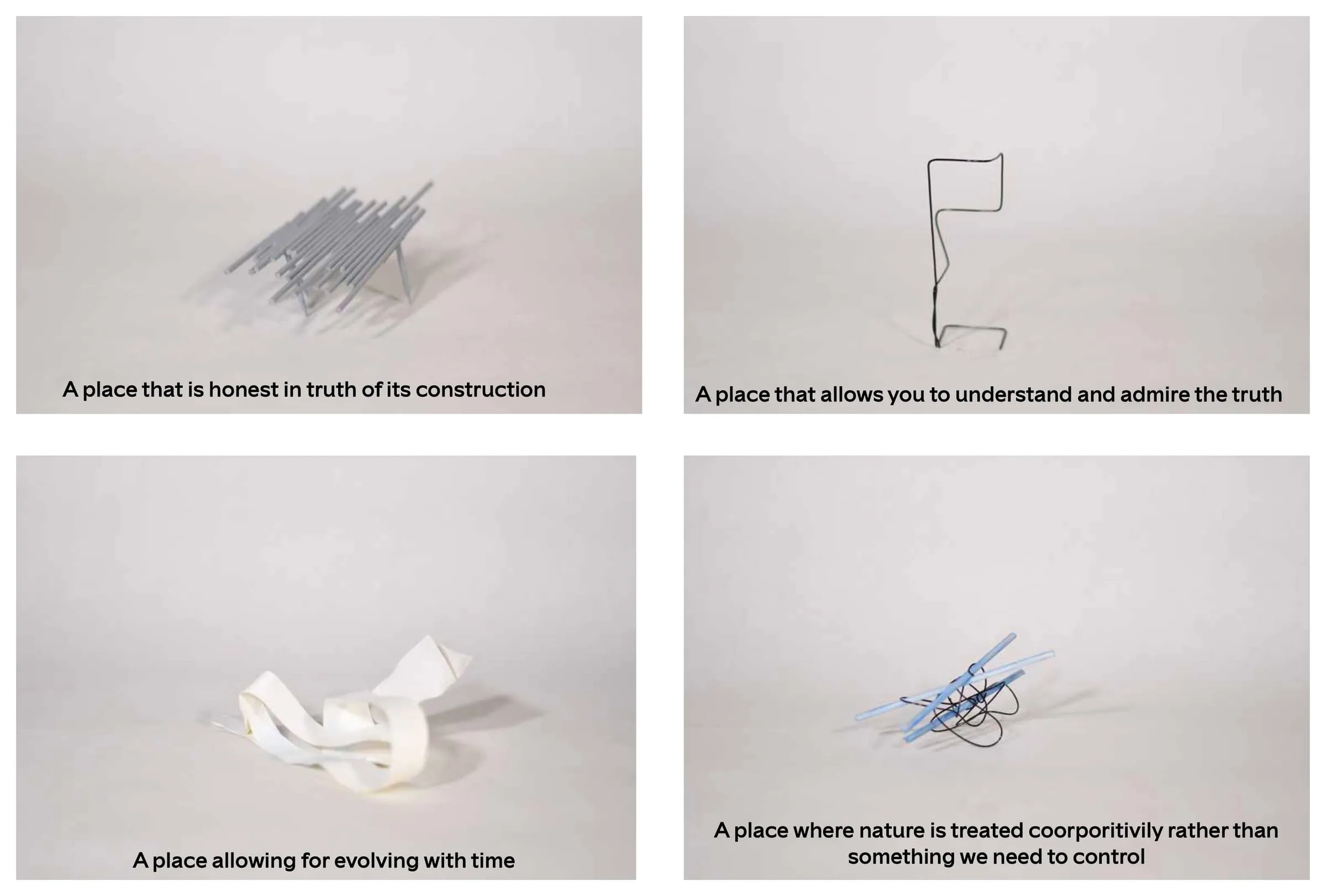
The work began by mapping what is underneath, drawing on archive documents, technical reports and sections through the landfill, to understand how deep it goes, how polluted it is and what it does to its surroundings over time. Alongside it, a series of models tested what kind of place could follow: one that is honest about how it is built, lets you understand it, can change over time, and works with nature instead of trying to control it.
Intervention
What if the cap were lifted? The strategy has three steps.
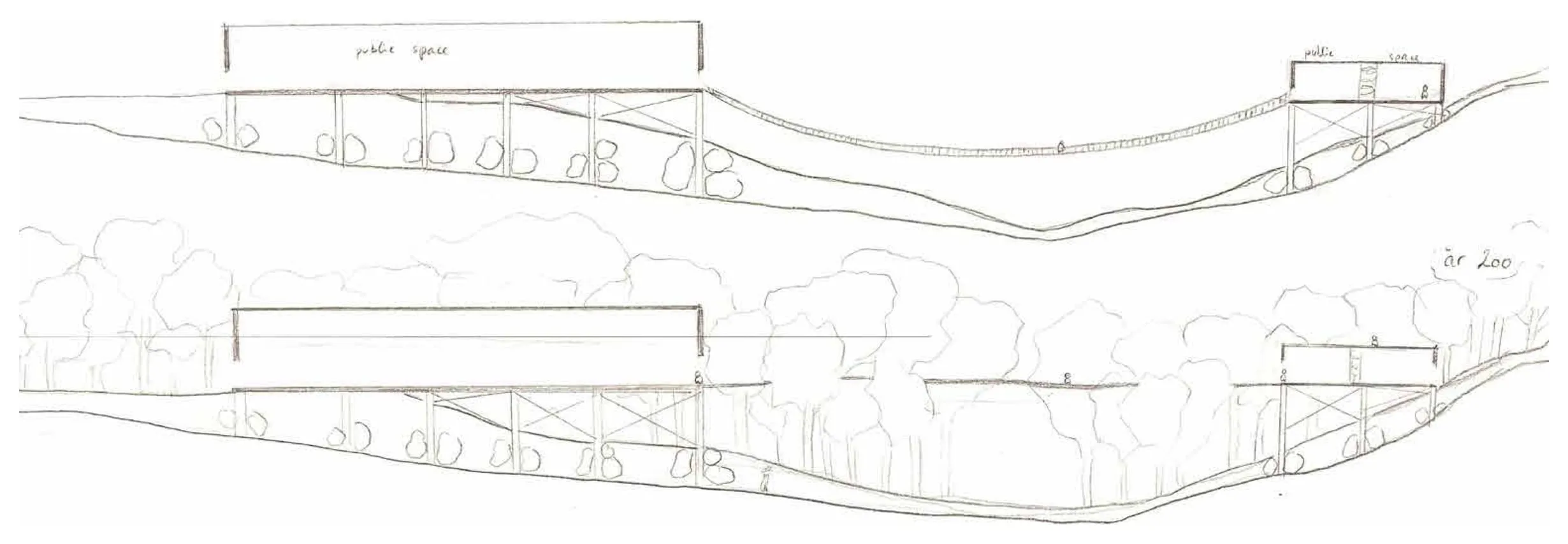
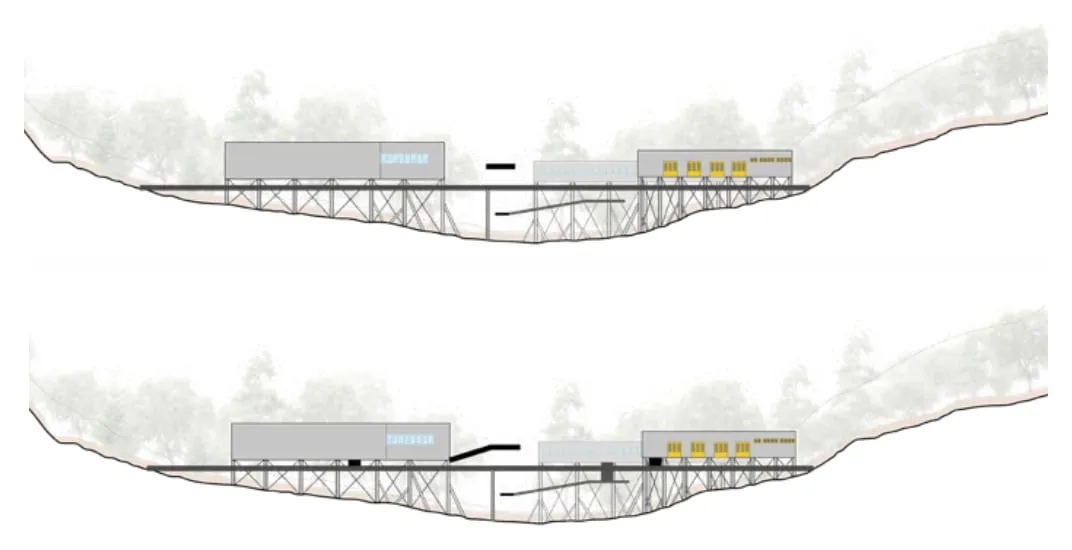
Nature restoration. The waste is dug out, sorted and recycled, and the ground is left to grow back, returning to its natural state over time.
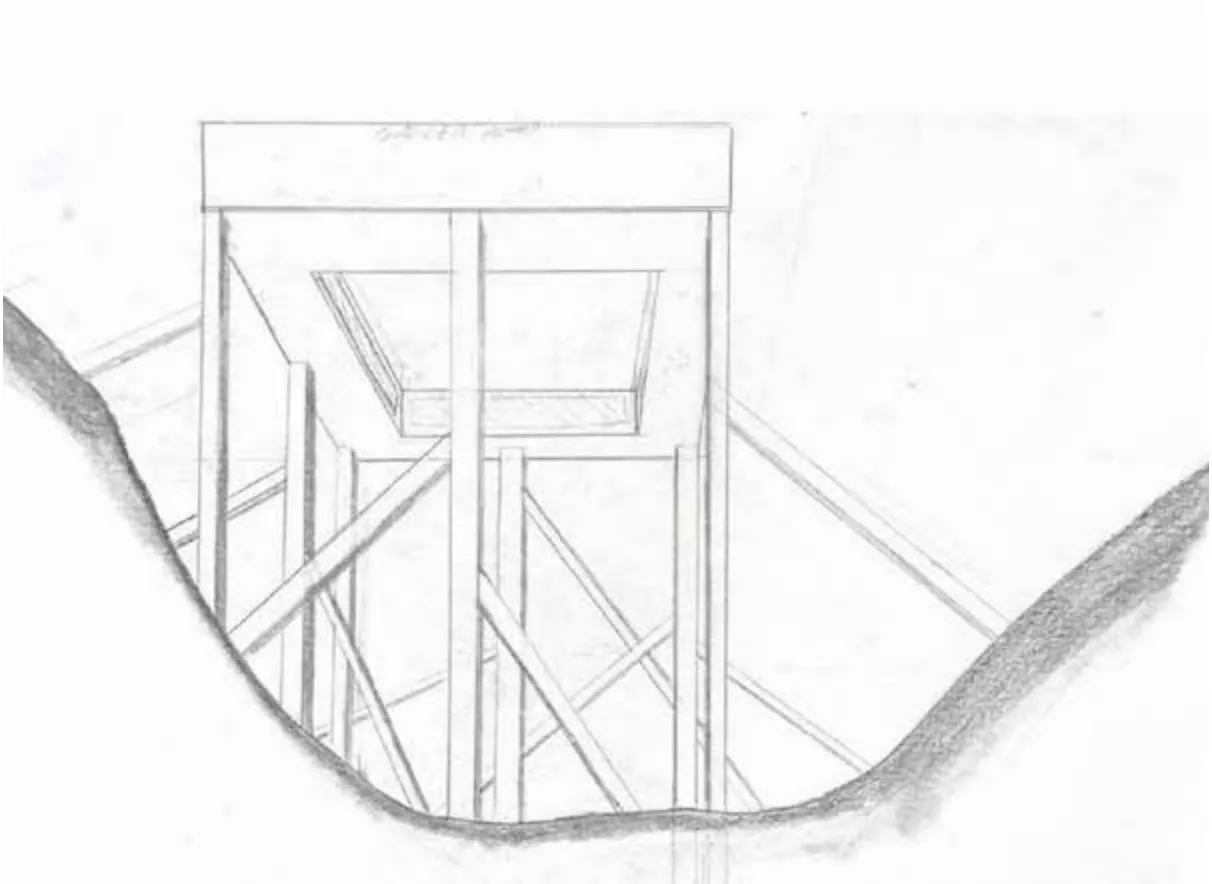
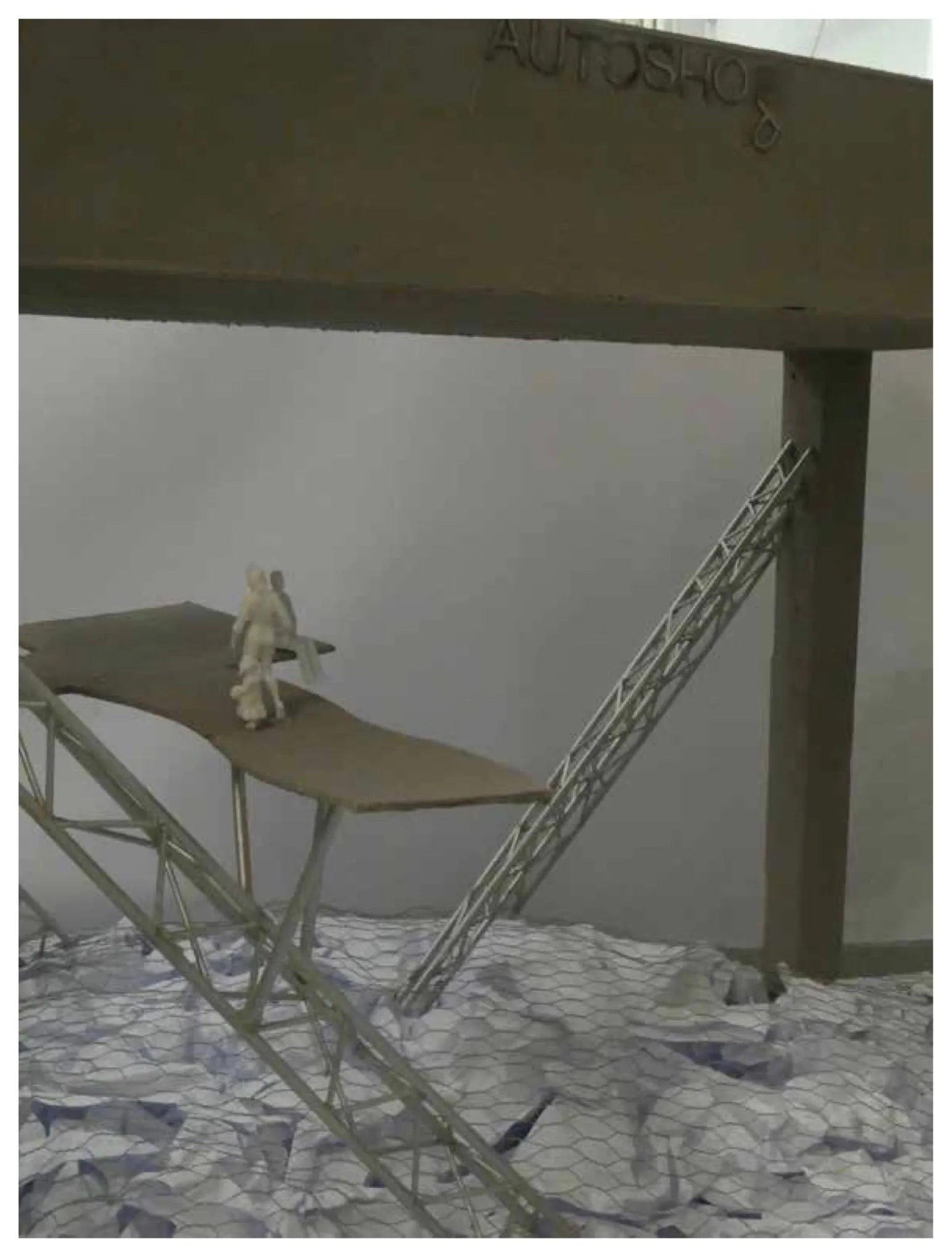
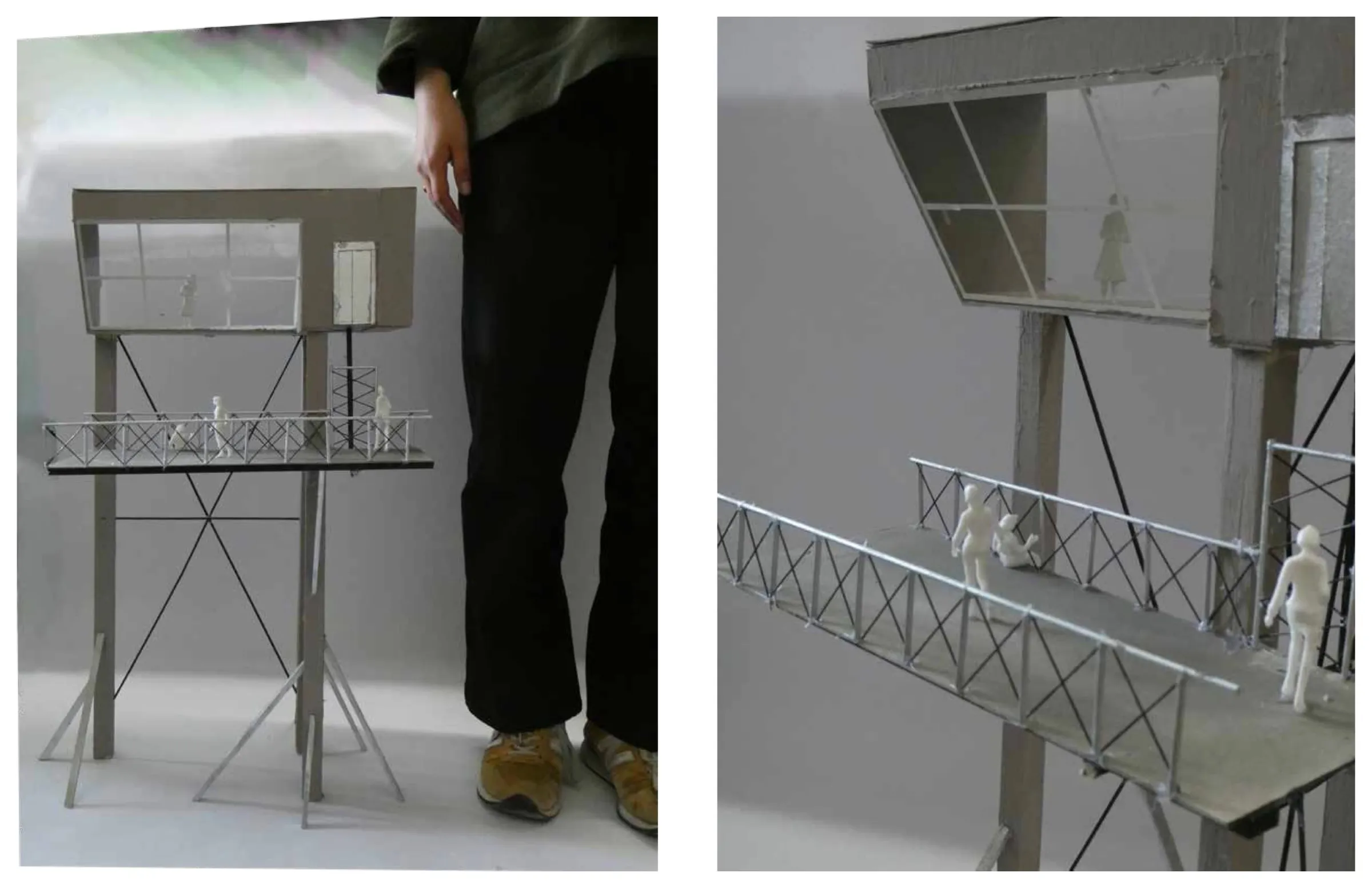
The structures. The buildings on the tip are kept. They stand on long piles anchored into the mountain, and the waste was what held them in balance, so new supports take its place: cross bracing and diagonal columns.
The new lifeline. A new infrastructure is built, disconnected from the land that was once capped. It gives the structures new uses, and as a new facade appears beneath them, the valley can be experienced from above.
It is not a finished design but a strategy that plays out over the next hundred years.